Asia · Solo Travel
Solo traveller · 19 min read
Region Himachal Pradesh, India |
Trip length 3 days, Kwar to Dodra |
Travel style Solo, guided by locals |
Kwar and Dodra, the last villages of Shimla district, are genuinely worth the effort it takes to reach them, 800-to-1,000-year-old villages, Kath-Kuni stone-and-wood architecture, hand-pressed apricot oil, and a local wool trade still running on hand looms. Bring cash and warm layers, mobile networks here run on BSNL and Airtel only, no Jio, and nights get properly cold even in the warmer months.
Kwar is the last village of Shimla district, and I arrived here after the drive through Chanshal Pass covered separately in the road-trip post that leads into this one. Nitin ji, from the village itself, spent the next two days showing me around, starting right by Kwar’s helipad, with Chanshal Pass, officially the district’s highest point, standing across from us. Locals here will tell you otherwise though, Chirangcha Peak, visible directly from the village, has never actually been surveyed or measured, so it doesn’t show up on any map, but by local estimate, it’s genuinely taller.
Kwar: An 800-Year-Old Village and a Triple-Locked Grain Store
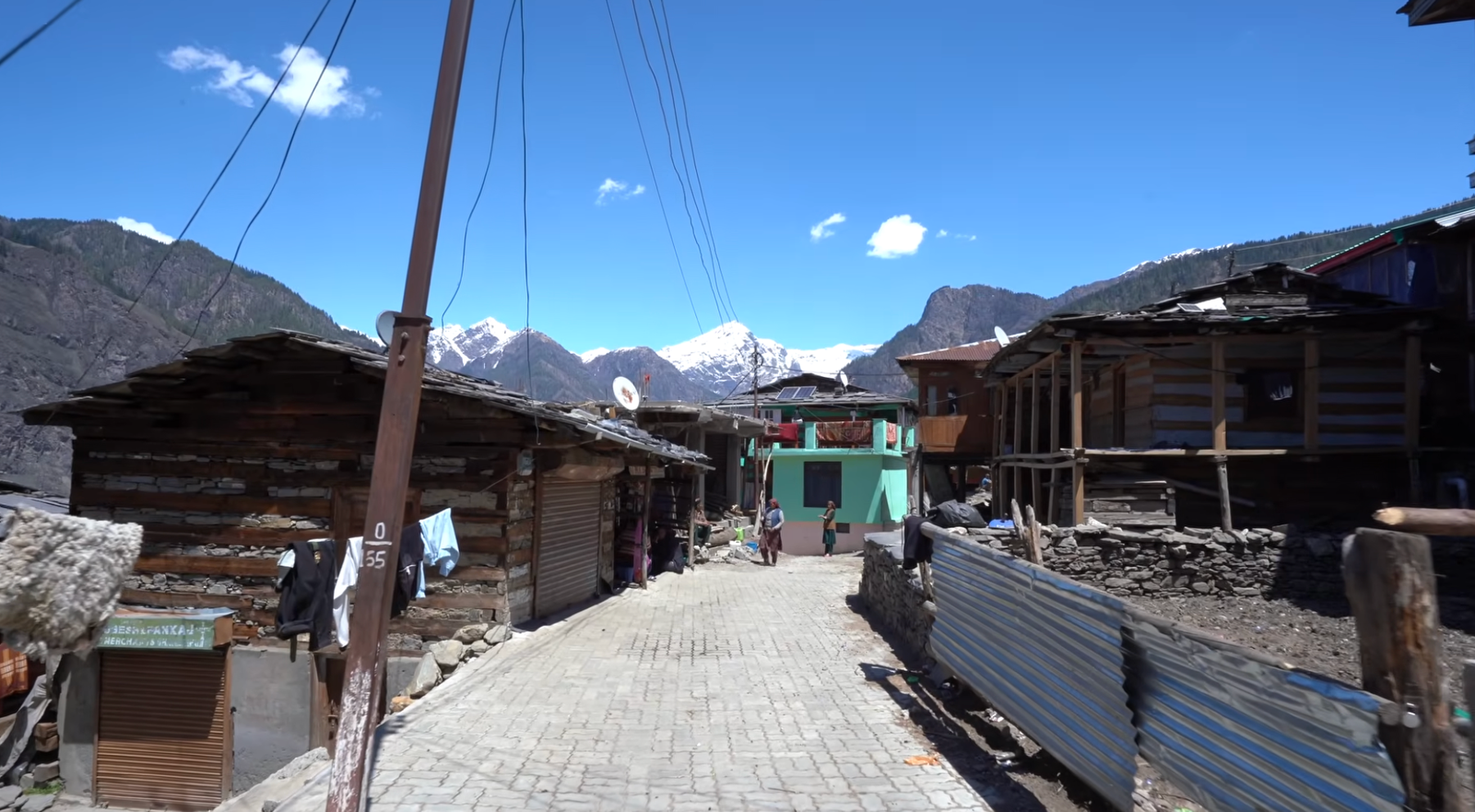
Kwar’s houses run mostly wood and stone, cattle kept on the ground floor specifically for moderate, stable temperature, families living on the floor above. Most homes here are 100 to 150 years old, the oldest standing at over 300, and the village itself, by local account, is somewhere between 800 and 1,000 years old, no written record, just what’s been carried down. The village’s family deity temple, dedicated to Kwar ji Maharaj, follows a genuinely unusual rule, only 32 specific people, chosen by the deity itself according to tradition, are permitted inside, a restriction that has nothing to do with tourists specifically and everything to do with how the village organises its own spiritual life. The temple itself is Kath-Kuni architecture, alternating layers of stone and timber, and it’s genuinely beautiful to look at even from outside.
Koda, called Mandua in Uttarakhand and Ragi elsewhere, grows here without any chemical input at all, cow dung the only fertiliser used. It goes into both Siddu and Badi, and I got to try Koda-based Siddu here, filled with something called Bhanjeeri, a grainy filling entirely different from the poppy-seed-and-lentil version I’d had a few days earlier on the road in. Eaten with ghee, and it works just as well with honey, alongside a glass of fresh milk, this alone made a full, satisfying meal.
The most genuinely unique thing I saw in Kwar was a Kothar, the household grain store, secured with a triple-lock system built around two keys, one small, one large, that together work through what’s effectively three separate locking stages. Grain stored this way keeps for three to four years, with more storage capacity below ground than above, and every family here maintains one, it’s treated as a basic household requirement, not optional. I also met a group of women in the village, well past 95 years old, wearing traditional ornaments genuinely worth stopping to admire.
Lunch back at the homestay brought Lingda, fiddlehead fern, genuinely one of my favourite things from this whole trip, alongside Kuttu (buckwheat) chapati, not usually my preference, but well made here, and a dip made from apricot shells, tangy and completely new to me. The sky here shifts constantly, sun to cloud and back four times in twenty minutes on the day I was there, part of the region’s particular microclimate.
A short drive to a neighbouring village turned up another restricted-entry temple, same tradition, villagers only, no exceptions for outsiders, alongside a viewpoint looking straight at Chirangcha Peak and a waterfall dropping from a serious height. Later, Purjaali village hosts a seven-day fair every August, traditional dance in full ceremonial dress, worth timing a visit around if you can. I also stopped to see how the local wool fabric, Pattu, gets made, hand-loomed from local sheep wool, yarn running about ₹3,000, finished fabric closer to ₹2,000 for a 22-inch width, measured entirely by hand. I took the fabric raw rather than waiting for it to be tailored, since I was leaving that same afternoon.
Wool, a ₹3,000 Loom, and a Night With 400 Sheep
That evening, I spent real time with Nitin ji’s father and brother, out with roughly 400 sheep with no permanent camp at all, just a bedsheet laid out wherever they happen to stop for the night. Guard dogs travel with them specifically to warn against predators, wolves and what’s locally described as lions (almost certainly leopards, in local translation), and will fight to protect the flock if it comes to that. I was properly layered up, shirt, sweater, jacket, and still cold; they’re simply used to it, though even they admitted the effort of sleeping out in an open, cold breeze night after night takes something out of you. I woke up thirsty around 2am and couldn’t bring myself to leave the blanket to get water. It’s a small, almost embarrassing thing to admit next to what they do every night out here.
I was too cold to leave my blanket for water at 2am. They sleep outdoors with 400 sheep every single night, all season.
The next morning brought sheep shearing, done twice a year, 20 to 25 people working through the flock, yielding roughly 1.5 to 2kg of wool per sheep, sent on to Himachal’s government Wool Federation. Once sheared, the sheep move down to warmer valley areas, Sirmaur, sometimes as far as Dehradun, until the cold passes.
Apricot Oil, Pressed by Hand
Nitin ji’s mother walked me through the whole apricot process before we left for Jiskun. Dried Chulli (apricot), five months in, sweet with a real tang. Two kernel types sit inside, the smaller Chulli seed, sour and oily, and the larger Khumani seed, closer to almond, both eaten straight from the shell. The oil itself, tasted directly, is genuinely bitter, and it’s used both as a massage oil and, a few drops at a time, for ear pain, a well-known regional remedy across North India.
Watching the actual extraction was the real education, kernels ground repeatedly, a little water added, the whole mass worked like dough in a dedicated container until the oil separates out, a process that genuinely takes 3 to 4 hours of real physical effort. Tasting oil pressed by hand, in front of the person who’d just made it, was a first for me.
Jiskun: No Bus, No Jio, and a Shortcut Only Locals Know
Jiskun sits 22km from Kwar by road, about an hour’s drive, though locals told me they simply walk a shortcut instead, 1 to 2 hours on foot, no car needed at all. There’s no bus service here whatsoever. A small general store doubles as everything, stationery, hardware, footwear, wool, genuinely a one-stop shop for the whole village.
A real shift happened here about 30 years ago, the village moved from a mostly meat-based diet to vegetarian after adopting the Radha Soami spiritual tradition, with a Satsang held once or twice weekly. The same earthquake-resistant Kath-Kuni architecture shows up here too, alternating wood and stone slab layers. The village deity normally resides in Dhara, an upper village, coming down to Jiskun only for two days during the August fair, and locals here store water-heating duties the same practical way as everywhere else on this trip, wood fire, given the unreliable power supply.
A half-hour climb from the village gives a proper view over the area, Pandar village visible nearby, itself only reachable by a 2-hour walk, no vehicle access at all, same for Jakha and Dhara. Worth knowing before you rely on your phone here: BSNL and Airtel both carry a 4G signal through Dodra, Kwar, and Jiskun, but Jio doesn’t reach this far. My guide here was Puneet Chauhan.
Dodra: A Water Mill, a Bugyal, and the Bishu Festival
Dodra sits another 22km on, about an hour by road, and my homestay host here had been running the place for 15 years, up at 5:45am to get the stove going before breakfast, a level of quiet dedication that stuck with me the whole visit. A half-hour climb above the village opens onto a Bugyal, genuinely one of the better viewpoints of the whole trip, farmland spread below and mountains in every direction.
A farmer working the land there was sowing Chullai seed alongside kidney beans, a deliberate intercropping choice, the legume fixes nitrogen into the soil and naturally suppresses competing growth, a harvest expected 3 to 4 months out. From the same Bugyal, two very different mountains sit across state lines, Kedarkantha Peak on the Uttarakhand side, a genuinely famous trek starting from Sankri and usually run as a 3-night, 4-day itinerary, and a Himachal-side peak opposite it. The Rupin Pass trek, a serious multi-day route, starts from around Jiskun and crosses into Uttarakhand before ending at Sangla, worth knowing if you’re a trekker planning a longer itinerary through this region.
A Gharat, a traditional water mill, sits 10km from Dodra, river water diverted through a canal to turn a stone grinding wheel entirely on the current’s own force. Flour ground this way stays genuinely cool to the touch, unlike the heat a machine grinder generates, and the mill only runs from August through January, entirely dependent on water flow. I brought 4kg of grain, though about 1.5kg went to waste since the mill hadn’t run in a week and needed to clear out before producing clean flour.
Dodra’s Forest Guest House, 100 metres from where I stayed, runs ₹560 per room per day, two rooms, up to four people, western toilet, clean wood interiors, bookable through the DFO office in Rohru or online via the eco-tourism website. A similar facility exists in Kwar too, though the road only gets you partway there, the last stretch is a 10-minute walk.
The trip closed with the Bishu Festival, a once-a-year, four-day celebration timed to Baisakhi, distinct from the separate August fairs held elsewhere on this route. Children in masks opened the festivities near the temple, followed by dancing, a performed play, and the whole village genuinely present and engaged, trophies from local competitions dedicated to the temple alongside it. Two episodes, one road in and one arrival, and this is where the whole journey through Kwar and Dodra came to a close.
Practical Info at a Glance
| Mobile network | BSNL and Airtel 4G work in Dodra, Kwar, and Jiskun; no Jio signal |
| Forest Guest House, Dodra | ₹560/room/day; book via DFO office Rohru or the eco-tourism website |
| Getting to Jiskun from Kwar | 22km / ~1hr by road, or a 1–2hr walking shortcut locals use |
| Bishu Festival | 4 days, timed to Baisakhi (mid-April), annually |
Common Questions
Will I have phone signal in Kwar and Dodra?
BSNL and Airtel both carry 4G through Dodra, Kwar, and Jiskun. Jio doesn’t reach this far, worth knowing before you rely on it.
Can tourists enter the village temples here?
No, entry to the family deity temples in this area is restricted to villagers, in Kwar’s case to just 32 chosen individuals. It’s a long-standing local tradition, not a tourist-specific restriction.
What’s the best way to get to Jiskun from Kwar?
By road it’s 22km, about an hour. Locals use a 1 to 2 hour walking shortcut instead, worth asking about if you’re up for the hike.
What should I eat in Kwar and Dodra?
Koda-based Siddu with Bhanjeeri filling in Kwar specifically, distinct from the Siddu found elsewhere in the region. Lingda (fiddlehead fern) is also genuinely worth seeking out.
This is the second half of a two-part journey. The road in, through Theog, Kharapathar, Giri Ganga, Jubbal, Hatkoti, and Chanshal Pass, is covered separately: The Road to Dodra Kwar: Siddu, a Rs 30,000/Kg Mushroom, and Chanshal Pass.
Planning something similar?
Email your route and I’ll reply with honest, first-hand advice, no fluff.
Ask Dhruval →