Asia · Solo Travel
Solo traveller · 18 min read
Region Bathinda & Fazilka, Punjab |
Trip length 1 day, Episode 3 of 4 |
Travel style Solo, with local hosts |
Bathinda, Punjab’s oldest living city, and Fazilka’s Sadqi border retreat ceremony make a genuinely full, contrasting day, 2,000 years of layered history at the fort, real agricultural life at a working organic farm, and a border experience noticeably more personal than Wagah, close enough for one-on-one photos with BSF soldiers.
- Bathinda Fort: 2,000 years, Razia Sultan, and a Guru’s visit
- A flat Kachori and Punjab’s oldest railway station
- Jyani Natural Farm: 80 crops and a rooster alarm at 4am
- The border at Sadqi and a retreat ceremony up close
- Fazilka: a 1947 sweet shop and a heritage Haveli
- Practical info at a glance
- Common questions
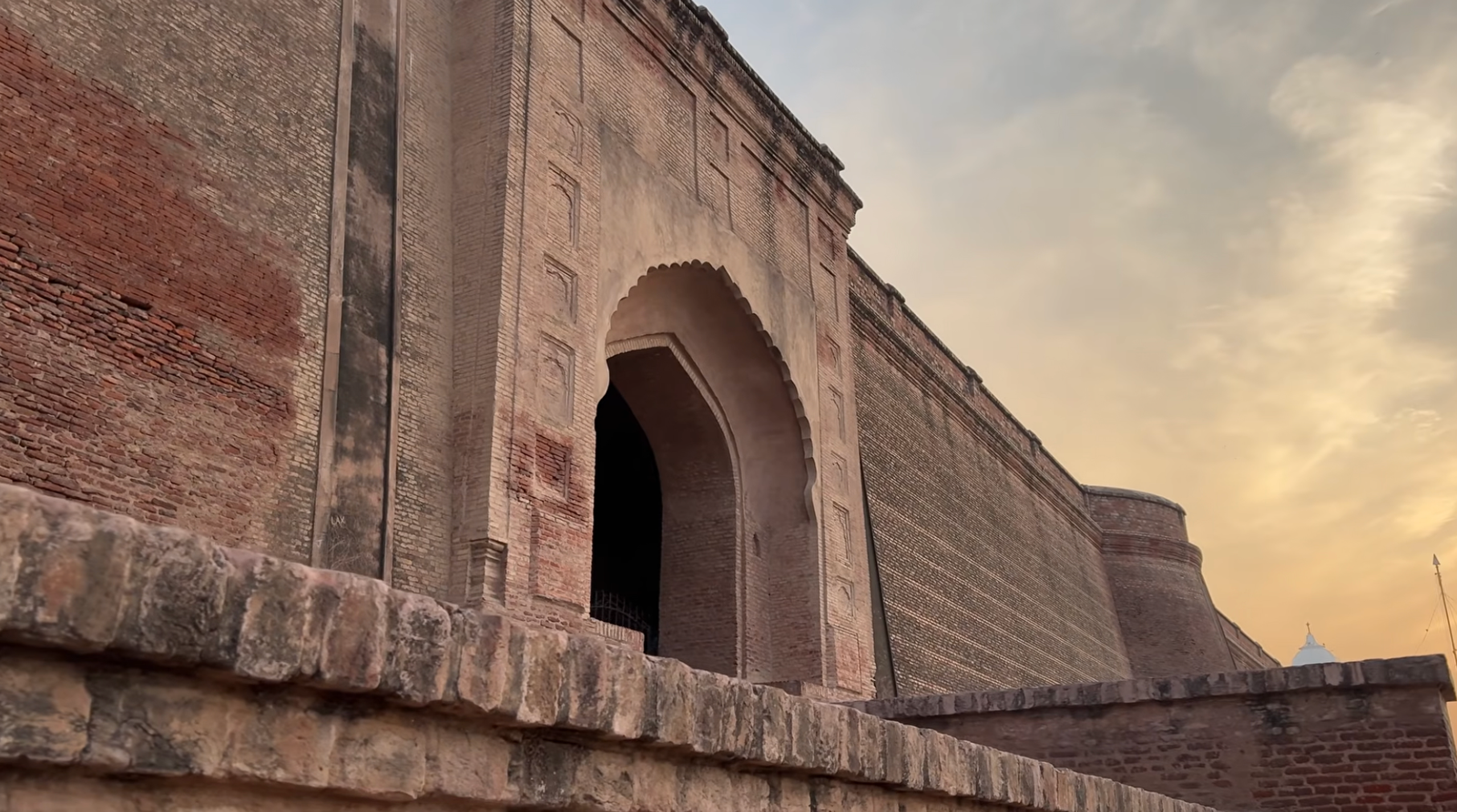
Bathinda claims the title of Punjab’s oldest living city, its history tracing back to the Indus Valley Civilisation, and the 2,000-year-old fort at its centre is exactly where this day started.
Bathinda Fort: 2,000 Years, Razia Sultan, and a Guru’s Visit
The Kushan Dynasty established this fort roughly 2,000 years ago, and the Rajput Bhati rulers who took it over in the 3rd century gave Bathinda its name. Prithviraj Chauhan later held a checkpost here, and Mahmud of Ghazni ruled it after him, part of a genuine local saying: whoever controlled Bathinda had a real shot at ruling Delhi too. The fort’s most striking chapter, though, belongs to Razia Sultan, India’s first and only female Muslim ruler. Held captive here after nobles rebelled against her rule from Delhi, she married the fort’s governor specifically to reclaim power, though she ultimately lost the war that followed.
The fort splits into two distinct sections, an ASI-marked area with boundary walls on all four sides, dome-shaped structures, and gardens, and a separate section holding two Gurudwaras, one original, one added later. Guru Gobind Singh’s connection here runs deep: Gurprit ji, the head Granthi, explained that the Guru arrived from Sri Muktsar Sahib after taking vows with Ratan Haji, and on finding his followers gathered, simply asked if they were alright, receiving nothing but genuine contentment at having met him in return. He continued on to Damdama Sahib, 25km away, where he formally established the Guru Granth Sahib, and 48 Sikhs learned directly under him during his time in this region. Devotees still start arriving here as early as 3am, staying to serve until 9pm most days.
A Flat Kachori and Punjab’s Oldest Railway Station
Vinod Kachori Wala in Sadar Bazar serves a genuinely different Kachori style, flatter than what I’d expect, made from plain flour rather than refined, crispy enough that no oil transferred to my hands at all despite it being fried. Dal and Chole mixed together, rather than served separately, topped with a bit of rice, was a new combination for me and worked better than it sounds. Lachhman Puri on Mall Road followed, Poori-Chole with curd, a breakfast I used to have at home regularly, though it’s been off my own table for a couple of years now as I’ve cut back on fried food generally. Tea at Arjun Tea Stall, right where three roads meet at Teen Koni, was solid if unremarkable, and the Rose Garden and Joggers’ Park nearby, complete with a small lake and separate walking and cycling paths, are both genuinely well maintained, worth an actual morning walk if your schedule allows it, which mine didn’t.
Three lakes sit close together near a thermal power plant that’s been decommissioned since 2017, part of why Bathinda carries the nickname “City of Lakes.” Shyam Dhaba, opposite a stretch of showrooms including Monte Carlo and Red Tape, did a genuinely good Dal Makhani, Palak Paneer, and Makki ki Roti, the spinach left coarser than the smooth purée I’m used to at home, a pleasant enough difference. One street here has visa-immigration offices or IELTS centres in roughly every third or fourth shopfront, a real, visible sign of how much this region’s economy is tied to outward migration. Bathinda’s railway station, built in 1870, holds the title of Punjab’s oldest, and Kotkapura’s Dodha and Atta Chicken are on my list for a future visit, not something I managed to try this time around.
Jyani Natural Farm: 80 Crops and a Rooster Alarm at 4am
Jyani Natural Farm, 15km before Fazilka, is a genuine working farm open to visitors, 80 different crops spread across 120 acres, over 50 Sahiwal cows, and food processing you can actually watch happen. Vishnu ji met me at the gate for a quick tour, and the property includes an 8 to 10 room Haveli built in 1960, ₹3,000 per room, well suited to a larger group staying together. Beyond the expected farm animals, geese, turkeys, and a Chakor, Pakistan’s national bird, known to sing itself into a genuine trance at the sight of the moon at night, keep things interesting, and a rooster here functions as a completely reliable 4am alarm for the whole property.
A traditional tea here, rose, hibiscus, cinnamon, and farm-grown lemon, is served to every guest, genuinely different from anything I’ve had before and healthy alongside it. A day tour runs 2 to 3 hours on its own, closer to 5 if you stay for wood-fire cooked food, which I’d genuinely recommend building the extra time for. Pallavi ji, Vishwajit ji’s wife, runs the cooking and product side of things together with him, and I picked up their 100% organic jaggery on the way out, a small gift from them on top of it, the kind of hospitality that makes you wish you’d blocked out more time here than you actually had.
The Border at Sadqi and a Retreat Ceremony Up Close
Fazilka town sits 15 minutes from the farm, the Sadqi border a further 33km on, laid out in a genuine V-shape you can pick out clearly on a map. The last inhabited point sits 3km short of the border itself, wheat fields running right up to the fencing on the Indian side, the Indian and Pakistani flags separated by barely 100 metres. The retreat ceremony here is a genuinely intense experience up close, the whole crowd chanting Bharat Mata Ki Jai and Vande Mataram together, and unlike Wagah, the smaller crowds here make one-on-one photos with BSF soldiers afterward genuinely possible rather than a crush to attempt.
Staying past the ceremony itself paid off, the sunset from just outside was worth the wait on its own, wheat fields and fencing marking the Indian side clearly, overgrown grass across the line on Pakistan’s.
Fazilka: A 1947 Sweet Shop and a Heritage Haveli
Fazilka town in the evening centres on an old Clock Tower in the market, and a heritage Haveli nearby is genuinely worth a look, 100-year-old tile work, an antique radio, an old chandelier, and one specific design detail I hadn’t seen before, a huge main door kept permanently closed, with a small disguised window built into it as the actual functional entry point, a deliberate piece of concealment worked right into the architecture.
Pakpattnian Di Hatti makes Tosha, a sweet genuinely unique to Fazilka. The shop owner’s family originally ran this same business in Pakpattan, Pakistan, 40km from here, before Partition, and the shop itself has operated in Fazilka since 1947. Tosha resembles a Gulab Jamun in shape but carries a distinct paneer-like taste and less sweetness, with a 15-day shelf life. Fazilka’s Jutti market, 12 to 14 shops, is a genuine highlight too, handmade pieces that hold their shape even folded, prices starting around ₹1,200 and running up to ₹9,000 to 12,000 for premium work. The market winds down by 8:30pm, most people back home within the half hour after.
Practical Info at a Glance
| Jyani Natural Farm stay | ~₹3,000/room; budget 2–3 hours for a day tour, 5 with wood-fire food |
| Sadqi border distance | 33km from Fazilka town; last inhabited point 3km before the border |
| Fazilka Jutti | ₹1,200 entry-level, ₹9,000–12,000 premium handmade |
| Fazilka market hours | Winds down by ~8:30pm |
Common Questions
Is the Sadqi border retreat ceremony better than Wagah?
It’s a genuinely different, more personal experience, smaller crowds mean real one-on-one photo opportunities with BSF soldiers afterward, something far harder to get at the more crowded Wagah ceremony.
What is Bathinda Fort’s connection to Razia Sultan?
India’s first and only female Muslim ruler was held captive here after a revolt in Delhi, and married the fort’s governor specifically to try to reclaim power, though she ultimately lost the war that followed.
Is Jyani Natural Farm worth an overnight stay?
Genuinely yes if you have the time, the hospitality alone, along with wood-fire cooked meals and the working farm setting, makes it worth more than a quick day-tour stop.
What is Tosha, and where can I get it?
A sweet genuinely unique to Fazilka, resembling Gulab Jamun but with a distinct paneer-like taste. Pakpattnian Di Hatti, running since 1947, is the shop to know.
This is the third of four posts covering a short Punjab series. Catch up on Patiala: A Dying Art, 22 Pleats, and a City’s 261st Birthday and Jalandhar & Kapurthala: Sports Balls, a Shakti Peeth, and a Moorish Mosque, or finish the series with Firozpur: The Real Story Behind the Martyrs’ Memorial.
Planning something similar?
Email your route and I’ll reply with honest, first-hand advice, no fluff.
Ask Dhruval →