Asia · Solo Travel
Solo traveller · 17 min read
Region Patiala, Punjab |
Trip length 1 day, Episode 1 of 4 |
Travel style Solo, with a local heritage guide |
Patiala rewards a full day built around Qila Mubarak and its old city, a 1.5 to 2-hour heritage walk through lanes designed to confuse thieves, a dying brass-polishing craft down to just two shops, and genuinely excellent Jutti and Phulkari shopping. “Live life king size” isn’t a slogan here, it’s the actual local self-description, and Maharaja Bhupinder Singh’s history backs it up.
- Qila Mubarak and a Kachori worth the trip alone
- The heritage walk: mansions, markets, and a dying art
- The Lane of Snakes and Qila Mubarak’s ten gates
- Maharaja Bhupinder Singh: Hitler’s Maybach and 27 Rolls Royces
- Jutti, Phulkari, and the Patiala Salwar
- An evening with Malwai Giddha
- Practical info at a glance
- Common questions
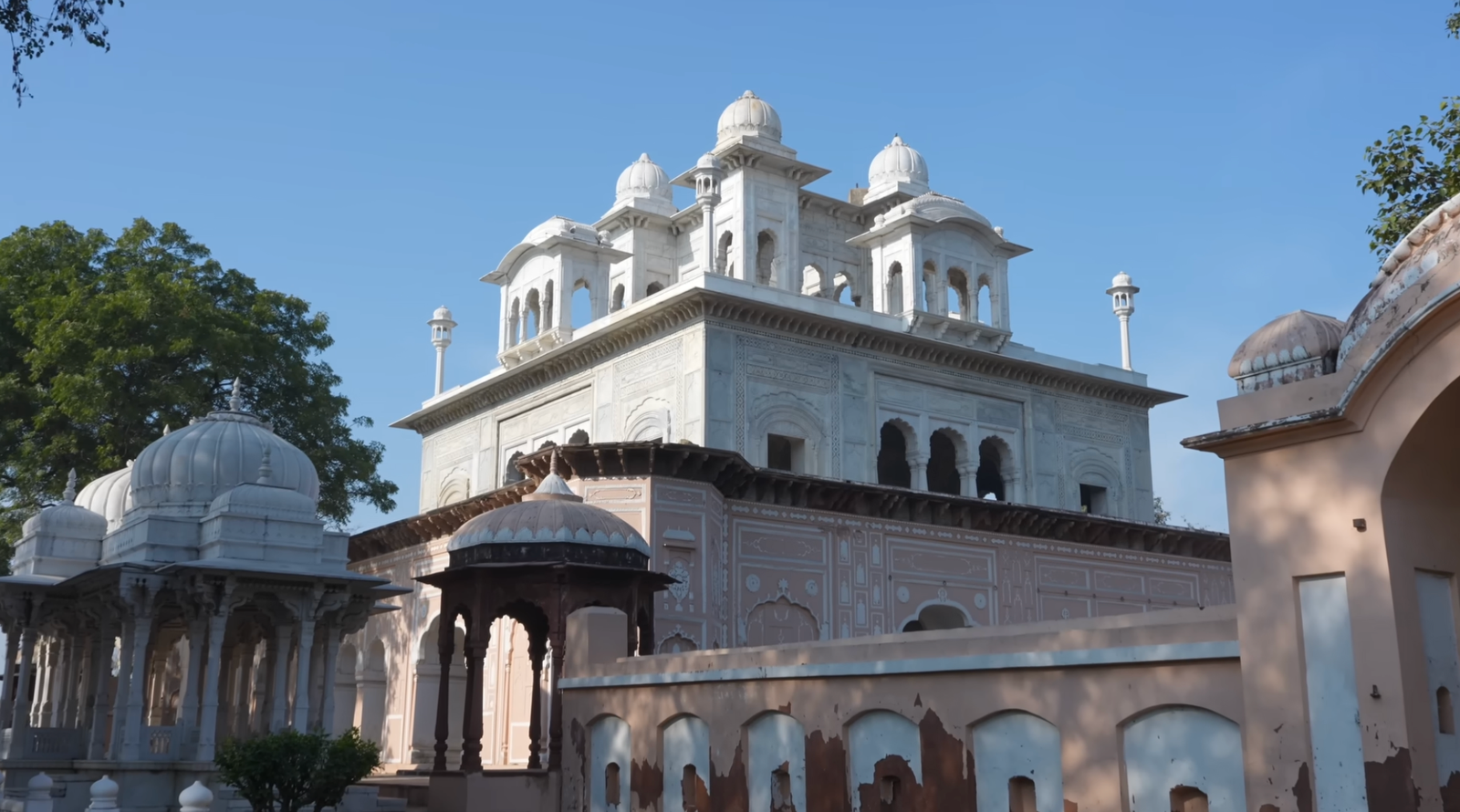
Patiala opened this Punjab leg of the trip, and I started at Qila Mubarak by 7:30am, the heritage structure genuinely striking enough that I decided to hold off on a proper visit until later in the day and go find breakfast first.
Qila Mubarak and a Kachori Worth the Trip Alone
Arya Samaj Chowk, and specifically Sadhu Ram Halwai, an old, established shop, was the actual first stop, Kachori paired with Poori-Chole, piping hot. The Chole here is genuinely the star, a level of flavour I haven’t found paired with Poori just anywhere. Around 50 to 60 book shops line this same stretch, though they only really open through the day. Cars can get in until 9am; after that it’s two-wheelers, battery rickshaws, or your own feet, and the whole area properly wakes up after 10am, especially on Sundays, when most households skip cooking breakfast at home entirely and head out instead.
The Heritage Walk: Mansions, Markets, and a Dying Art
Mr. Ravi, from the Patiala Foundation, gave up two to three hours to walk me through the old city, starting at Baba Aala Singh’s Samad, and as it turned out, I’d arrived on Patiala’s actual founding anniversary, 1763, the exact spot we were standing on. The size of a Samad here traditionally reflected the prominence of the person buried, and Baba Aala Singh’s is genuinely huge, family members buried alongside him. His great-grandfather, Baba Phul, is the root of the entire Phulkian dynasty, which also produced the royal lines of Nabha and Jind.
The walk from here to Qila Mubarak covers about 1.2km, 1.5 to 2 hours once you actually stop along the way, which you will. A rod-iron railing design, 150 to 200 years old, repeats across the whole old city, consistent enough that it feels like one contractor handled the entire town. Haveli Wala Mohalla once held around 100 mansions in this exact Mughal-Rajasthani-British fusion style; only two survive today. Chhatta Nanumal, the house of a former Dewan, is one of just two Chhattas remaining in Patiala, the other being Chhatta Magni Ram, home to another Dewan of the same era. The old wooden girders throughout genuinely change how the whole street feels to walk under.
Patiala’s old city was laid out with dedicated zones, Daal-Daliya Chowk for provisions, Gur Mandi for jaggery, Mishri Bazar for rock sugar, and Bartan Bazar, roughly 50 utensil shops, for readymade utensils. That last one holds a genuinely dying craft: Kalai, the re-polishing of brass utensils, done today at just two adjacent shops. Gopal Chand ji, doing this work for 40 to 45 years now, explained that a freshly polished piece lasts 5 to 6 months, and that brass, widely considered the best material for cooking, has fallen out of favour purely because people don’t want the ongoing effort of maintaining it.
Just two shops in the entire city still practise Kalai, brass re-polishing, after 40 to 45 years in the trade. The irony is that the best cooking utensils are the ones people have stopped using.
The Lane of Snakes and Qila Mubarak’s Ten Gates
Sappan Wali Gali, the Lane of Snakes, has no actual snakes, the name comes from its deliberately winding, snake-shaped layout, originally home to goldsmiths who used the confusing design to make their way home safely in the evenings without getting mugged. Even Mr. Ravi, on what he told me was his 188th visit here, still gets turned around occasionally, the turns genuinely look identical to each other.
Darshani Deori Gate is one of the survivors from an original ten entry gates into the fort area, only 3 or 4 still standing today, the rest lost to time though the tourism department is actively working on restoration. These gates historically opened at 4am and closed by 7pm, purely for the fort’s security. Qila Mubarak itself spans 10 acres, with 13 chambers inside Qila Androon specifically, the Darbar Hall where the Maharaja once held court sitting right there. The museum, holding Bohemian chandeliers, the cannon of Kale Khan, and one of the Maharaja’s Rolls Royces, was closed for restoration during my visit, worth checking current status before you go. Ran Baas Palace Hotel, inside the fort complex, has been operating for about a year now.
Maharaja Bhupinder Singh: Hitler’s Maybach and 27 Rolls Royces
Ask most people outside Punjab what Patiala means to them, and “Patiala Peg” comes up before almost anything else. The man behind that reputation for excess was genuinely larger than life. Maharaja Bhupinder Singh kept a fleet of 27 Rolls Royces, funded Chail’s first cricket stadium, and gifted the Queen a Cartier diamond set. He commissioned a Gurmukhi typewriter from Remington. And in 1935, on a visit to Germany, he asked to see Hitler, who reluctantly granted him 15 minutes that stretched into multiple days of meetings, ending with a rare Maybach, one of only six ever built, gifted directly to him alongside a set of German pistols, a genuinely well-documented piece of history, not just local legend. On a trip to London, press coverage noted he travelled with 200 suitcases and was honoured with 2,000 flowers daily. He backed the British through both World Wars, sending 28,000 soldiers during the second.
Patiala’s own units of measurement still carry his legacy. A Lassi glass here runs double the standard size, and a “peg,” the local unit for a shot of alcohol, is measured with four fingers rather than the usual two, the origin of the term Patiala Peg. Baba Aala Singh’s original seat, where he heard public grievances, marks the last stop on the heritage walk, tied to a Punjabi phrase, “your house is mine,” passed to his father by Guru Gobind Singh as a Hukumnama, an honorary title bestowed on the family. A mirror positioned here once functioned as an early warning system, aligned to reflect all three gates, Qila Androon, Qila Mubarak, and Darshani Deori, at once, so guards could spot anyone approaching at speed or behaving suspiciously before they got close.
Jutti, Phulkari, and the Patiala Salwar
Patiala Shahi Lassi, at Sheran Wala Gate, was Mr. Ravi’s own recommendation, and the Gajar Halwa I ordered alongside it turned out just as good as the Lassi itself. Adalat Bazar, the wedding-shopping hub, is car-free, two-wheelers only, and roughly every 8th or 10th shop here makes and sells Jutti or Phulkari.
Genuine Patiala Jutti is handmade, leather both inside and outside, pure soft leather specifically, running ₹2,000 to 2,500. Traditional designs skip the inner cushioning modern versions have added, a trade-off between authentic feel and everyday comfort, and either is a fair choice depending on what you’re after; I ended up genuinely preferring the less-cushioned traditional pair once I actually had it on.
Phulkari, floral embroidery worked across a visible base, and Bagh, where the floral work covers the base entirely, are both distinctly Patiala crafts, and handmade versions genuinely only come from here. Prices ranged widely: a Bagh-design dupatta on crepe fabric at ₹7,800, a lighter Phulkari piece at ₹5,300, a Phulkari-Gotta-Patti combination at ₹6,600, and a full Khaddar Bagh piece, also ₹7,800. All handmade Phulkari needs dry cleaning only, never a machine wash. Genuine antique pieces, 250 to 300 years old in some cases, run ₹15,000 to 20,000 in this same shop, and equivalent handmade Pakistani work can exceed ₹1 lakh.
A genuine Patiala Salwar has exactly 22 pleats, matched front and back, and prices at Bhapa ji Salwara Wale ran ₹450 to 550 depending on whether the piece is machine or handmade. The Patiala-style turban is the most recognisable of Punjab’s regional turban styles, and this same market carries a wide colour range if you want to bring one home.
An Evening With Malwai Giddha
Five kilometres out on the city’s outskirts, past fields of wild yam, mustard, dragon fruit, and sugarcane, the PV 11 Malwai troupe put on a genuinely energetic Malwai Giddha performance for me. I’d assumed, from the name Babeyan da Giddha, that the dress would be plain white; the troupe’s colourful attire, they explained, is simply how the tradition has evolved over time. It’s a completely different register from the classical Giddha most people picture, sharper, faster, genuinely infectious energy.
Two local words are worth knowing if you spend any real time here: a “Geda” is a simple, solo outing, out and back; a “Gedi” is specifically friends meeting up, driving a set route together for an hour or two, just to talk. Spot a Thar or Fortuner cruising slowly with friends inside, and that’s exactly what’s happening. I closed the day with Bhalla-Papri Chaat and Gol Gappa at Ambala Chaat, the Gol Gappa served with five separate flavoured waters, genuinely worth trying each one on its own before mixing.
Practical Info at a Glance
| Heritage walk | ~1.2km, 1.5–2 hours with stops; arrange a guide through the Patiala Foundation |
| Old city access | Car access until 9am only; two-wheeler, battery rickshaw, or on foot after that |
| Patiala Jutti (handmade) | ~₹2,000–2,500 |
| Handmade Phulkari/Bagh | ~₹5,300–7,800 new; antique pieces ₹15,000–20,000+ |
Common Questions
Did Hitler really gift a car to the Maharaja of Patiala?
Yes, this is well-documented history, not local legend. In 1935, Maharaja Bhupinder Singh received a rare Maybach, one of only six ever made, from Hitler personally, after a brief meeting stretched into several days.
What makes Patiala Jutti different from other Jutti?
Genuine Patiala Jutti is handmade from pure soft leather, both inside and outside. Traditional pairs skip the cushioning that modern designs have added.
How is Patiala Phulkari different from Phulkari found elsewhere?
Genuine handmade Phulkari and Bagh work specifically comes from Patiala. It requires dry cleaning only, and antique pieces can run considerably higher than new ones.
Why is a “peg” bigger in Patiala?
Local tradition measures a peg with four fingers instead of the usual two, and Lassi glasses here run double the standard size, both tied to the city’s larger-than-life reputation.
This is the first of four posts covering a short Punjab series. From here, the plan was Jalandhar next: Jalandhar & Kapurthala: Sports Balls, a Shakti Peeth, and a Moorish Mosque, followed by Bathinda to Fazilka: A 2,000-Year-Old Fort and the Border at Sunset, and finally Firozpur: The Real Story Behind the Martyrs’ Memorial.
Planning something similar?
Email your route and I’ll reply with honest, first-hand advice, no fluff.
Ask Dhruval →