Asia · Solo Travel
Solo traveller · 18 min read
Region Hoi An, Central Vietnam |
Trip length 1 evening, Episode 3 of 10 |
Travel style Solo |
Hoi An genuinely earns its reputation, basket boat rides on the Thu Bon River, a 250-year-old Chinese Assembly Hall, and lanterns lighting up the Hoai River every evening. Arrive by noon if you’re only staying one night, five extra hours makes a real difference here, and avoid Oct-Dec if you can, this exact heritage-town road floods regularly in that window.
Looking back at this whole trip, South Vietnam next time will mean going properly offbeat, Dalat’s hill-station flower festivals and Nha Trang’s beaches are already on my list. But if I had to name the single best stretch of this entire journey, it’s Central Vietnam, and Hoi An is exactly where that stretch begins.
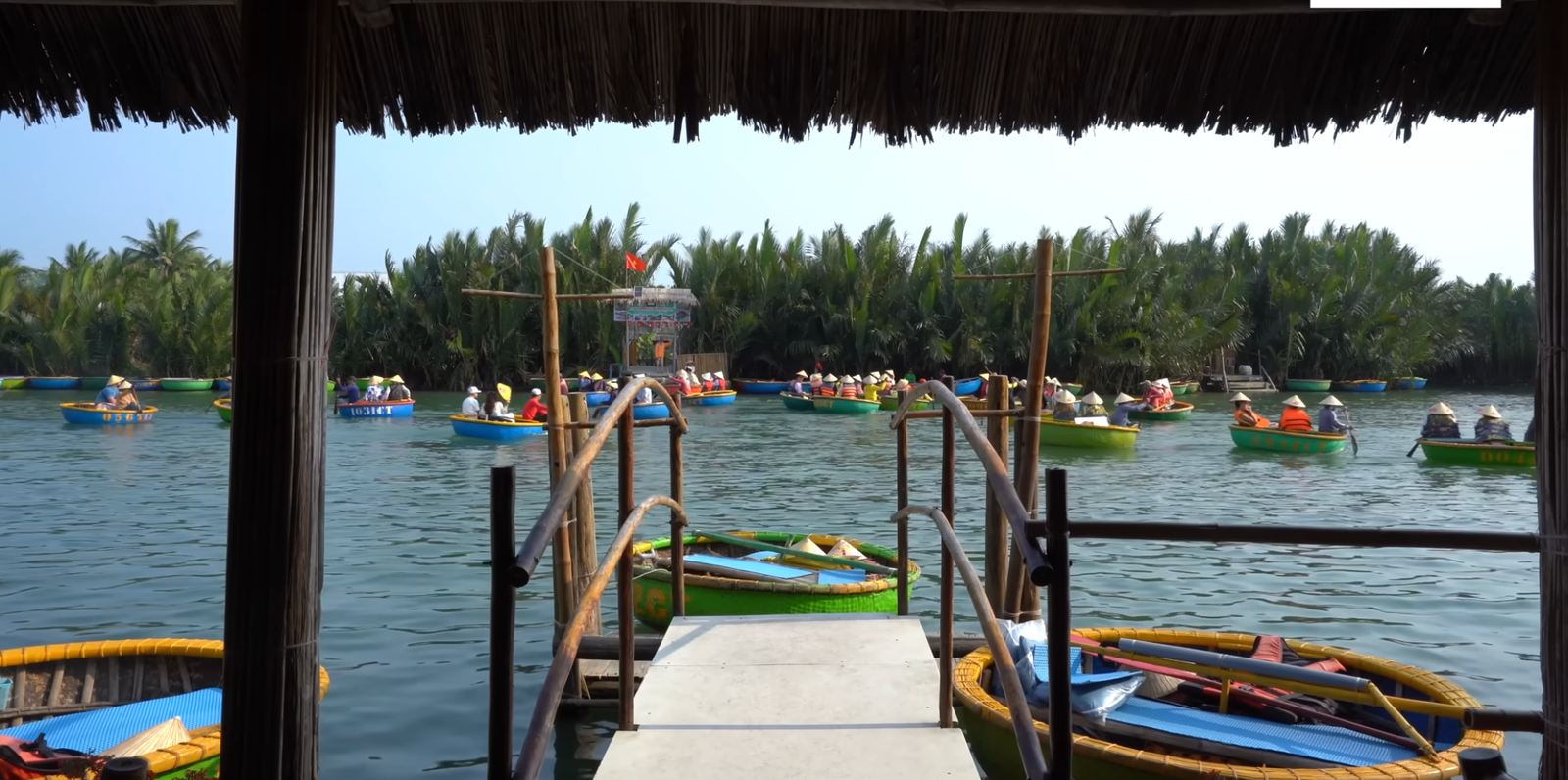
Coconut Forest Basket Boats on the Thu Bon River
About 4km before Hoi An proper, the Coconut Forest is genuinely worth the stop for its round “basket boat” rides, roughly ₹800 and usually an hour, though ours ran shorter given the late-afternoon timing. The Thu Bon River here runs brackish, seawater mixing in about a kilometre downstream where it meets the sea, and local fishermen do double duty as boatmen, fishing mornings and early afternoons, then rowing tourists through the same water once the day cools. Water depth sits around 3 metres, and the coconut canopy overhead blocks enough direct sun to keep the whole ride genuinely comfortable even in the afternoon heat.
One boatman offered a faster, spinning version of the ride for about ₹340 extra; I lasted 30 seconds before the dizziness made me ask him to stop, worth knowing your own tolerance before committing to that upgrade. What struck me more than the ride itself was the complete absence of discarded plastic anywhere on the water, a genuinely clean tourism setup. This whole experience is essentially the same idea as Hampi’s Coracle rides back in Karnataka, and it’s hard not to notice how much more aggressively Vietnam markets this exact activity compared to how little most Indians even know about Hampi, let alone its own coracle tradition.
The Champa Kingdom History Behind Hoi An’s Architecture
Hoi An’s Old Town genuinely feels like it’s carrying 2,000-plus years at once, and there’s a real historical reason for that. Around the 2nd century, two groups, one from Gujarat, one from Java, settled in this part of Central Vietnam, and over the following century or two, formed the Champa Kingdom, fully established by the 4th century and ruling this region until the 15th, when forces from North Vietnam pushed them out, the remaining Cham population living today in South-Central Vietnam. Japanese and Chinese traders arrived through the 16th to 18th centuries, when Hoi An functioned as a genuine sea port, and Europeans followed after that. The result, still visible today, is Chinese, Japanese, and European architecture sitting on the same streets, most shops still operating out of houses that are 250 to 300 years old and genuinely well maintained.
The Chinese Assembly Hall and a 400-Year-Old Merchant House
Five separate Chinese community groups, each living apart from the others, built their own assembly halls here, and the biggest of the five, entry 120,000 VND, roughly ₹400, is 250 years old. A small local superstition greets you at the door: men enter left foot first, women right foot first, for good luck. Inside, a ceramic table marks where community elders once held meetings. Genuinely worth knowing: Hoi An was never touched by the America-Vietnam war, which is exactly why so many of these heritage structures survive intact today.
Most of the Chinese community here were Confucianist or Buddhist, and the hall reflects both, a Sea Goddess idol installed for safe-journey assurance before sea voyages (not formally worshipped, just appealed to), alongside a Lady Buddha statue. A Holy Eyes God, said to see 1,000 to 1,500km away, and a Holy Ear God, who hears distant events and warns the Sea Goddess accordingly, sit to either side. A ring structure overhead lets visitors tie a written wish to it for a small donation, 500 to 1,000 VND. The hall closes sharply at 5:30pm.
A nearby merchant house museum, roughly 400 years old, was home to a Chinese merchant family across five or six generations before the government converted it into a museum. Its design is genuinely clever, two entrances, one from the market side, one facing the river, letting goods come in by boat, get stored on the ground floor, which connects both ends, and go back out to be sold, with the family living upstairs the whole time. Displays here cover silk-making, Champa-era weaving, and French-era sewing machines, and a real pottery village sits just 3km from here if you want to see where a lot of the ceramics in town actually come from.
Lanterns on the Hoai River
Hoi An earns its “Lantern City” nickname properly once the sun starts going down over the Hoai River, boats and houses lighting up together, and cafe culture here means tables and chairs set up outside nearly every shop, genuinely made for sitting and watching the evening unfold rather than rushing through it. A night market runs daily, 6 to 10pm, handicrafts, souvenirs, and street food, and a rickshaw ride through the old town costs about 250,000 VND, roughly ₹850, for 20 minutes if you’d rather see it that way.
The evening lantern boat ride itself is the real centrepiece, 20 minutes on the water, a lit candle-lantern to float mid-river, market noise and light spilling from both banks. My guide’s full-day service, 140 USD, bundled this boat ride and entry tickets together with no extra charges, though the boat ride alone typically runs 10 to 15 USD if you’re booking it separately. Along the riverside huts, a local performance called Bai Choi runs regularly, male and female performers using numbered cards, guessing games, and storytelling to engage the crowd, with prizes for correct guesses. It’s genuinely popular in Central Vietnam specifically, and UNESCO has documented the tradition on its own channel if you want more background before you see it live.
The Japanese Bridge, and When Not to Visit Hoi An
The Japanese Bridge, built between 1617 and 1620, originally connected the old Japanese and Chinese quarters, and the Chinese later added a Buddhist temple directly on top of it, with the Vietnamese building the roof you see today specifically to protect that temple from the elements. It’s a genuinely famous enough structure that it’s printed on the actual 20,000 VND banknote, worth checking your own wallet against it if you’re carrying Vietnamese currency.
Timing matters more here than most places. January through March, plus April, are genuinely the best months, May onward brings summer heat, 38 to 40°C on average. October through December is monsoon season, and this exact heritage-town road floods 3 to 4 feet regularly during that window, 4 to 5 times a month, each flood lasting a day or two before receding. A marker on one wall in town shows the 2017 flood level, with 1964’s flood recorded as even higher. Tourists still visit year-round regardless, but the market, boating, and lantern activity all scale back noticeably during flood season, and the road can get closed by police entirely if the water rises enough.
Dinner closed the night at a nearby Indian restaurant, Dal Makhni for roughly ₹425 and Tawa Chapati for about ₹125. One practical thing worth knowing: restaurants here generally don’t serve water for free, expect to buy a bottle separately, sometimes running up to ₹200 for half a litre depending on where you are. I’d arrived at 5pm rather than noon, and in hindsight that cost me a genuine five hours, enough time for the pottery village and a couple more museums. If you’re only staying one night in Hoi An, get here by midday.
Practical Info at a Glance
| Chinese Assembly Hall entry | 120,000 VND (~₹400); closes 5:30pm sharp |
| Lantern boat ride | ~10–15 USD standalone, 20 minutes |
| Best months to visit | January–April; avoid October–December (flood season) |
| One-night stay tip | Arrive by noon, not evening, to get full value from a single night |
Common Questions
Does Hoi An actually flood every year?
Yes, regularly between October and December, the Old Town’s main road can flood 3 to 4 feet, several times a month, each event lasting a day or two.
Is one night enough in Hoi An?
It can work, but arrive by noon rather than evening if that’s your plan. A late-afternoon arrival can cost you several hours you won’t get back.
Why does Hoi An have such a mix of architectural styles?
Successive waves of Champa Kingdom rule, then Chinese and Japanese traders, then European settlers, each left their own architectural mark, all still visible on the same streets today.
Do restaurants in Hoi An serve free water?
Generally no, expect to purchase bottled water separately, sometimes at a noticeable markup depending on the restaurant.
This is the third of ten posts covering a full Vietnam trip. The full series:
- Ho Chi Minh City: Inside the Cu Chi Tunnels
- Independence Palace and the War Remnants Museum
- Hoi An: The Lantern City by Basket Boat (this post)
- My Son Sanctuary and a Night on Dragon Bridge
- Ba Na Hills: A French Town in the Clouds
- The Marble Mountains and My Khe Beach
- Hai Van Pass to Hue’s Imperial Citadel
- Hanoi: Train Street and the Hoa Lo Prison
- Ha Long Bay: A Day on a 5-Star Cruise
- Ninh Binh: Boats Rowed by Foot, and a Series Finale
Planning something similar?
Email your route and I’ll reply with honest, first-hand advice, no fluff.
Ask Dhruval →