Asia · Solo Travel
Solo traveller · 18 min read
Region Jalandhar & Kapurthala, Punjab |
Trip length 1 day, Episode 2 of 4 |
Travel style Solo, with a local guide |
Jalandhar and Kapurthala together make a genuinely full day, Jalandhar for a 200-year-old Kachori shop, one of Punjab’s biggest book markets, and a major sports-manufacturing industry most visitors never hear about, Kapurthala for French-influenced heritage architecture that earned it the nickname “Paris of Punjab.” Go hungry, this is one of the most food-dense days in this whole series.
Jalandhar opened this day with Gurvinder ji’s genuinely accurate advice: in Punjab, you need to increase your appetite before you do anything else. We went straight for food.
A 200-Year-Old Kachori and a Dish From Pakistan
The local Kachori style here is genuinely its own thing, split open and filled with Chole, potato, and salad rather than eaten plain, a Punjabi cousin of Gol Gappa in structure if not flavour. The shop serving it has run for over 200 years, and frying in mustard oil rather than the usual refined oil adds a genuine crunch, mustard oil being the healthier choice too. Mildly spiced, surprisingly light for something fried, the kind of dish where you lose count of how many you’ve had rather than pace yourself. If you’re driving, park at Jyoti Chowk and take a battery rickshaw the rest of the way in, traffic in the lanes makes walking the last stretch more practical anyway.
Near Mittha Bazar, close to Jaggu Chowk and Gujranwala Chowk, Kadah Katlama is genuinely worth seeking out specifically, a dish that traces back to Peshawar and Gujranwala in Pakistan. Katlama itself resembles a Poori but tastes distinctly salty, made from white flour in layers with ghee worked between them before frying, and it’s served alongside a semolina Halwa cooked properly in desi ghee. This particular stall only serves it 7am to noon, and it genuinely does sell out before closing some days, so don’t leave it for later in the morning. Poori Chole at Jain Poori Wala rounded out the savoury side, served with four types of pickle, mango, sweet-and-sour pumpkin, carrot, and taro root, two seasonal, two always on offer, alongside a black-lentil-stuffed Poori that’s deceptively light for its size, most people here comfortably work through 5 or 6 of them.
Punjab’s Biggest Book Market and a Shakti Peeth
Mai Hiran Gate Book Market runs over 400 shops, covering everything from school-level texts to college material, and by local account, this is the biggest book market in Punjab. A cluster of musical instrument shops sits nearby, drawing buyers from as far as Himachal, and at Calcutta Music House, I watched a genuinely skilled Tabla and Harmonium performance from someone who’d been formally trained since 2010.
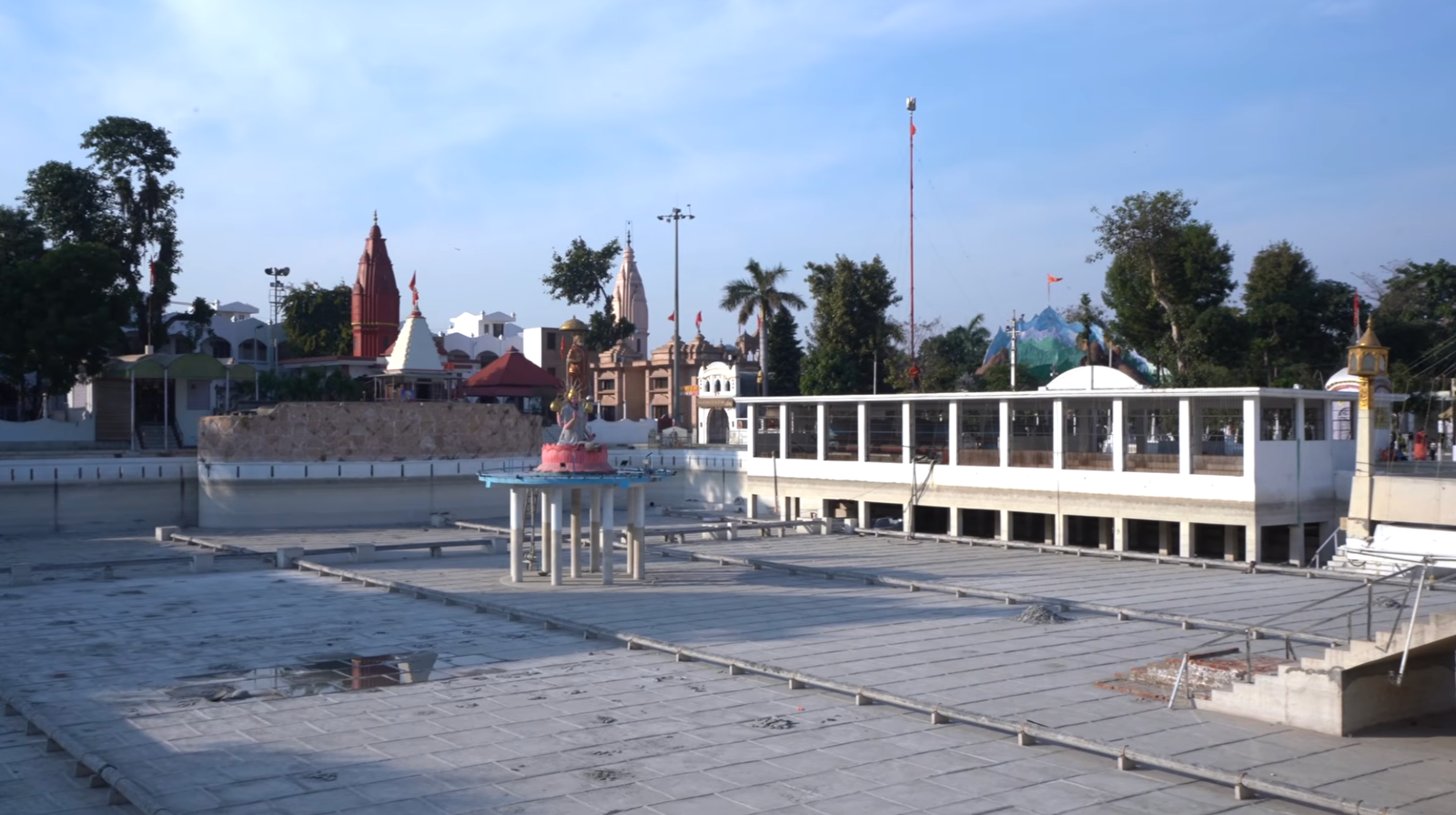
Devi Talab Mandir, a Shakti Peeth complex, holds Shri Tripurmalini Maa’s temple alongside separate shrines to Vaishno Devi, Saraswati, and Lakshmi. As one of 51 Shakti Peeths, the sacred stone here, representing where a part of the goddess’s body is said to have fallen, stays covered rather than displayed openly, and the idol was established by Adi Guru Shankaracharya himself, discovered, by tradition, in a nearby pond. A separate Goddess Kali temple in the same complex opens its original idol for viewing specifically on Baisakhi.
Jalandhar’s Hidden Sports-Manufacturing Industry
Football Chowk turned out to be a genuine surprise, a sports-goods market on a scale I hadn’t expected anywhere in India, roughly every third shop dealing directly in sports products. Jalandhar and Meerut are India’s two real manufacturing hubs for this industry, considerably ahead of smaller centres in Ahmedabad or Bhubaneswar. At Fenta Sports, Manoj ji walked me through cricket bat production, Kashmir Willow and English Willow both used, a bat going from raw cleft to finished product in just 1 to 2 days. A handmade leather cricket ball here costs a bit more than machine alternatives, and a short factory video on hockey stick manufacturing, starting from raw fibre thread, filled in the rest of the picture. If you’re driving G.T. Road, this is genuinely worth a stop even if sports gear isn’t on your list, just to see the scale of it.
Kapurthala: The Paris of Punjab
Kapurthala, a former princely state, earned its “Paris of Punjab” nickname largely for its cleanliness and its unmistakably French-influenced architecture. Jagatjit Club, 118 to 120 years old, shows this clearly in its French-style columns; Jagatjit Palace itself now functions as an army school. I’d hoped to film the city’s large rail coach factory but couldn’t get permission, so heritage sites and food filled the day instead.
Near Bhagat Singh Chowk on The Mall, Oberoi Special has served Chole-Bhature since 1934, made in the same style as Delhi’s well-known Sitaram’s in Paharganj, fluffy Bhature fried and finished on a flat pan, spicy mashed potato served alongside. Panch Mandir, close to 200 years old, was built on royal commission, red-stone pillars rather than cement, five temples in total, the main one dedicated to Krishna and Radha. The 120-year-old Clock Tower nearby now houses a government high school, a fairly typical afterlife for old-town clock towers.
A stranger volunteered to walk me to Shalimar Bagh, delaying his own plans by half an hour to do it, genuinely generous. The site holds royal tombs, kings and queens both, alongside a baradari pavilion where queens once bathed and prayed at an adjoining Gurudwara, both structures roughly 200 years old.
The Moorish Mosque and Science City
Lunch was Palak Paneer, Kadhi, and Tawa Chapati, the Kadhi carrying a genuinely dominant dried coriander and fenugreek flavour that I’d argue is exactly what makes Punjabi Kadhi distinct from other regional versions. The Moorish Mosque, nearly a century old now, was designed by a French architect drawing directly on Marrakesh, an open central courtyard, a wood-panelled ceiling, and interior walls carrying floral designs alongside verses from the Quran.
Science City, on Kapurthala’s outskirts, charges ₹580 per person for full access to all activities, though a base ₹210 covers entry alone, with individual activity tickets on top. The Science Voyage Hall covers space and lunar exploration in real depth, including recent high-resolution imagery released from the Moon’s south pole by Japan’s aerospace agency, and a flight simulator ride, ₹65, runs about 4 to 5 minutes, once an hour. A proper visit to this one gallery alone needs 2.5 to 3 hours; the Science Explorium gallery, covering the maths behind real-world applications including cricket, is worth the extra time if you have it. Budget at least 1.5 to 2 hours minimum for a worthwhile visit here.
Practical Info at a Glance
| Kadah Katlama timing | 7am–12pm only; often sells out before close |
| Science City entry | ₹210 base entry, ₹580 for full access to all activities |
| Getting to Mai Hiran Gate | Park at Jyoti Chowk, battery rickshaw for the rest |
| Kali temple original idol | Viewable specifically on Baisakhi |
Common Questions
Why is Kapurthala called the “Paris of Punjab”?
Its French-influenced architecture, the Moorish Mosque and Jagatjit Club especially, along with a reputation for cleanliness that’s stuck since its princely-state days.
Is Jalandhar really a major sports-goods manufacturing hub?
Yes, alongside Meerut, it’s one of India’s two biggest centres for sports equipment manufacturing, cricket bats and hockey sticks especially, though it’s not something most visitors associate with the city.
What time should I go for Kadah Katlama?
Morning, well before noon. The stall only serves it 7am to 12pm and regularly runs out before closing.
How much time should I budget for Science City in Kapurthala?
At least 1.5 to 2 hours for a worthwhile visit; a proper tour of just the Science Voyage Hall alone runs 2.5 to 3 hours.
This is the second of four posts covering a short Punjab series. Start from Patiala: A Dying Art, 22 Pleats, and a City’s 261st Birthday, or continue on to Bathinda to Fazilka: A 2,000-Year-Old Fort and the Border at Sunset and Firozpur: The Real Story Behind the Martyrs’ Memorial.
Planning something similar?
Email your route and I’ll reply with honest, first-hand advice, no fluff.
Ask Dhruval →