Asia · Solo Travel
Solo traveller · 17 min read
Region My Son & Da Nang, Central Vietnam |
Trip length 1 day, Episode 4 of 10 |
Travel style Solo |
My Son Sanctuary is genuinely one of the most surprising stops in Vietnam for an Indian traveller specifically, a Hindu Shiva temple complex over a thousand years old, with India’s own Archaeological Survey involved in restoring it. Pair it with Dragon Bridge’s Friday-to-Sunday fire and water show back in Da Nang for a proper day of ancient and modern spectacle.
From Hoi An, this morning’s destination was My Son Cultural Heritage Centre, also called My Son Sanctuary, entry 150,000 VND per person, around ₹510. What I hadn’t fully expected walking in was a genuine Shiva temple complex, and the reason for that goes all the way back to the Champa Kingdom’s own Indian roots.
My Son Sanctuary: A Shiva Temple 2,000 Years in the Making
Genuinely worth knowing before you even walk in: India’s own Archaeological Survey has a camp office right here, a real, active restoration partnership between the two countries, a sign right at the entrance confirms it. My Son holds around 70 monuments across the site, representing six distinct styles of Champa-era art, and UNESCO declared the whole complex a World Cultural Heritage Site in 1999.
The museum on-site traces the trade route that likely brought the original Gujarat settlers here, by sea through the Malacca Strait, either directly to Champa or via Java first. One of the earliest Sanskrit inscriptions found anywhere in Southeast Asia is documented here, recording King Srimara’s dedication of temples to Hindu gods, with ruins on display dating between the 2nd and 5th centuries. Ancient pillars, 1,500 to 1,800 years old, and a Nandi statue sit alongside a genuinely rare find: a Mukh-Ling, a Shivling carved with a face on its front, only discovered in 2012 and dated to the 7th or 8th century.
Walking Through the Ruins
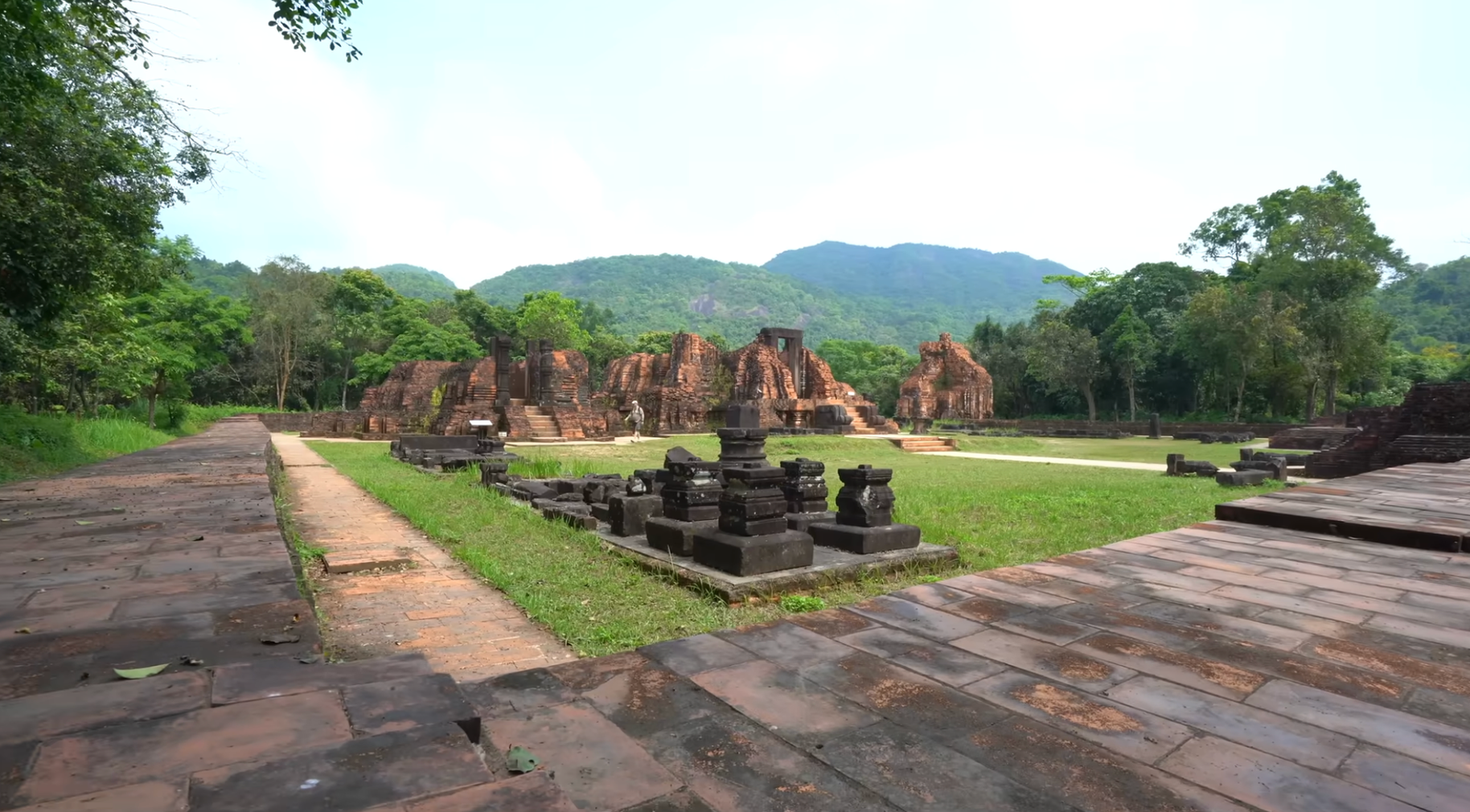
A short electric-car ride and a walk over a stream and a small bridge leads to the main ruins. The first group, marked Group H, includes a reference to a 13th-century 8-headed dancing Shiva statue. Over 1,500 years, Vietnam’s repeated wars caused most of the actual destruction here, not time itself, and that includes direct damage from American bombing between 1967 and 1970, a specific bombed site clearly marked on the grounds today. Not a single temple here survives fully intact as a result.
The Central Group, largely built in the 11th century, is genuinely over a thousand years old, goddess sculptures and a Shivling still visible along the original entrance path where devotees, including the King himself, once meditated before entering the inner sanctum. A meditation hall nearby holds an 8-armed Shiva statue, reassembled from separate pieces, a broken Nandi statue, and a Ganesh carving, three windows on either side letting light in. Restoration work over the past five years has focused specifically on reassembling scattered fragments and placing them back at their original positions, the central Shivling among them.
The Champa Dance Show and a Coconut Water Break
Dance performances run at 9:45am, 10:30am, 11:15am, and 2pm daily, three separate five-minute pieces: a traditional festival dance, a performance built around Champa community instruments, and a five-artist piece depicting different aspects of Shiva. The Champa today survive as an ethnic group rather than a nation, roughly 200,000 people concentrated mostly in Ninh Thuan and Binh Thuan provinces, with a further community across the border in Cambodia. Chilled coconut water on the way out, kept in a freezer rather than just refrigerated, was a genuinely welcome break in the heat.
Han River and Dragon Bridge’s Fire Show
Back in Da Nang by late afternoon, Sangha Vegetarian Restaurant did mushrooms in butter and garlic with bread, and a second mushroom preparation in coconut milk and vinegar served inside the coconut shell itself, genuinely rich, more butter than I’d have chosen given I’ve been trying to cut back lately, though the flavour justified it. The Han River in the evening, and Han Market nearby, ground floor for dry fruit, coffee, and groceries, upper floor for footwear and garments, most shops closing by 7 or 8pm, made for an easy pre-dinner wander.
Dragon Bridge, crossed earlier in the day without much fuss, is a genuinely different experience at night, lighting that shifts colour every 10 to 15 minutes. On Fridays, Saturdays, and Sundays at 9pm, a 15-minute fire and water show has the dragon’s head breathing fire four to five times before spraying water up to 50 metres, worth watching from the side rather than standing directly on the bridge unless you don’t mind getting wet. Cruise boats also pass by offering an hour-long lit-up view of the surrounding buildings if you’d rather see it from the water. Couples attach padlocks with engraved names to the railings here too, “Bridge of Love” is the local name for it, and nearby shops will engrave a lock for you on the spot if you want to add your own.
Practical Info at a Glance
| My Son Sanctuary entry | 150,000 VND (~₹510) |
| Dance show timings | 9:45am, 10:30am, 11:15am, 2pm daily |
| Dragon Bridge fire show | Fri–Sun, 9:00–9:15pm; watch from the side, not on the bridge |
| Han Market hours | Most shops close by 7–8pm |
Common Questions
Why does My Son Sanctuary have Hindu temples in Vietnam?
The Champa Kingdom that built this complex traces its origins to settlers from Gujarat and Java around the 2nd century, bringing Hindu religious practice with them, Shiva worship specifically shaping much of what’s on display here.
Is India actually involved in restoring My Son?
Yes, the Archaeological Survey of India maintains an active camp office on site as part of a genuine restoration partnership with Vietnam.
What time is the Dragon Bridge fire show?
9:00 to 9:15pm, Fridays through Sundays only. Watch from the riverbank rather than standing on the bridge if you want to stay dry.
Are Champa people still around in Vietnam today?
Yes, as an ethnic group rather than a nation, roughly 200,000 people, concentrated mainly in Ninh Thuan and Binh Thuan provinces, with a smaller community in neighbouring Cambodia.
This is the fourth of ten posts covering a full Vietnam trip. The full series:
- Ho Chi Minh City: Inside the Cu Chi Tunnels
- Independence Palace and the War Remnants Museum
- Hoi An: The Lantern City by Basket Boat
- My Son Sanctuary and a Night on Dragon Bridge (this post)
- Ba Na Hills: A French Town in the Clouds
- The Marble Mountains and My Khe Beach
- Hai Van Pass to Hue’s Imperial Citadel
- Hanoi: Train Street and the Hoa Lo Prison
- Ha Long Bay: A Day on a 5-Star Cruise
- Ninh Binh: Boats Rowed by Foot, and a Series Finale
Planning something similar?
Email your route and I’ll reply with honest, first-hand advice, no fluff.
Ask Dhruval →